The water is out of the basement, the fans are running, and now comes the question that keeps La Crosse homeowners up at night: is any of this covered? The short answer is that most standard homeowners policies cover sudden and accidental water damage — and a pipe that bursts in a La Crosse cold snap is the textbook example. But "sudden and accidental" has boundaries, and adjusters enforce them. This guide explains the distinction that decides most claims, how to document so yours survives scrutiny, and the special cases for renters, landlords, and commercial buildings.
The Deciding Factor: Sudden vs. Gradual Damage
Insurance covers events, not wear and tear. A pipe that freezes and bursts overnight during a -20°F cold snap is sudden and accidental — the kind of loss policies are written for. A pipe that has been seeping into a wall cavity for six months is gradual damage, and it is almost always excluded, even if the wall only collapsed today. The gray area in the middle is where claims live or die: a slow drip the homeowner noticed but did not fix, a corroded pipe that was visibly deteriorating, a shutoff valve everyone knew was stuck.
Adjusters look for signs of neglect. Was the heat on? Were the pipes insulated? Was the property occupied? In La Crosse, where every insurer knows what winter does to plumbing, keeping the heat on and the pipes reasonably maintained is the baseline expectation. A burst in a heated, occupied home is a strong claim. A burst in a vacant house with the furnace off is a much harder one — check your policy's vacancy and neglect clauses if the property will sit empty.
What Is Typically Covered — and What Is Not
When a burst pipe claim is approved, coverage generally extends to the damage the water caused: soaked drywall, flooring, insulation, cabinetry, and belongings. It also typically covers the emergency mitigation itself — professional water extraction and structural drying are part of stopping the loss from growing, and insurers expect you to mitigate promptly.
What is usually not covered: the pipe itself. The plumbing repair or replacement is considered maintenance, while the resulting water damage is the covered loss. So the plumber's fix for the split section generally comes out of pocket, while the ruined carpet and the drying equipment are the claim. Mold remediation sits in a middle zone — many policies limit or exclude it unless it resulted directly from a covered water loss, which is another reason to document that the mold came from this burst, not a pre-existing moisture problem. If moisture was left to spread, our burst pipe mold remediation guide explains how crews handle post-burst mold.
Documentation Tips That Protect Your Claim
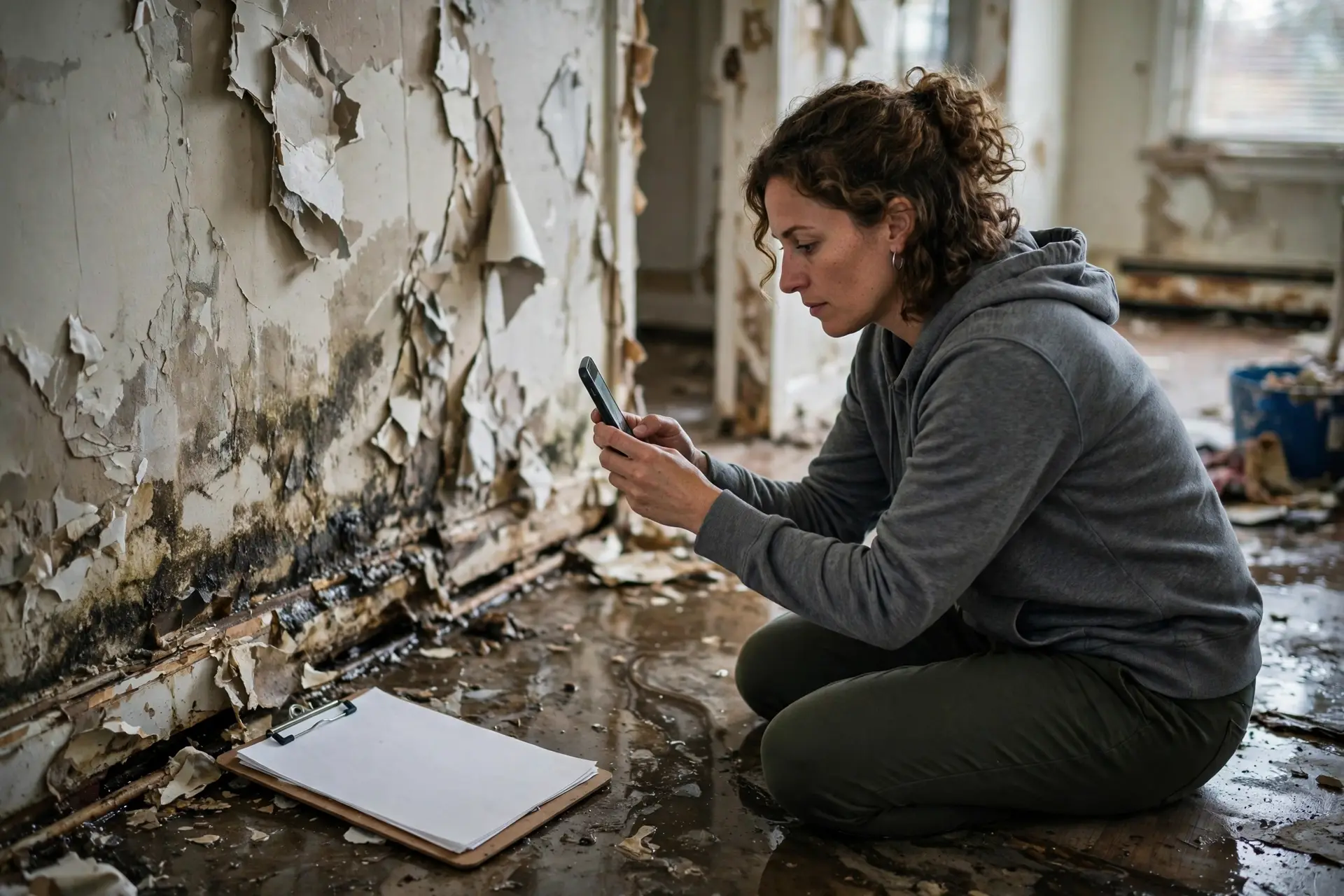
Your claim is only as strong as your evidence. Before you move or clean too much, photograph every affected room wide, then close-ups of the burst pipe section, water lines on walls, wet flooring, and damaged belongings. Take video and narrate as you walk: where the water came from, what it touched, what you moved. Keep a written timeline — when you discovered it, when you shut off the water, when the crew arrived. Timestamps matter, because adjusters distinguish between damage from the burst itself and damage that worsened while the homeowner waited.
Save samples of removed materials — a section of ruined carpet, a warped baseboard — and keep every receipt: supplies, dehumidifier rental, the cleanup invoice. Professional cleanup crews document moisture readings and drying logs, which gives your claim third-party verification that the work was necessary and complete. Do not discard damaged items until the adjuster has seen them; "it was already thrown out" is how legitimate damage becomes unproven damage.
Renters and Landlords: Who Covers What
In a rental, the lines are clear but the responsibilities are split. The landlord's policy generally covers the structure — walls, floors, the building's plumbing system. Your renters policy covers your belongings. Neither covers the other's property, which is why renters insurance matters even in a well-maintained building.
If you are a tenant and a pipe bursts: notify your landlord immediately, in writing — a text or email with a timestamp. Take your own photos of your damaged belongings. Do not wait for the landlord to act before protecting your own property; move your belongings and mitigate what you can, then sort out responsibility. If you are a landlord, respond fast: a delayed response to a burst pipe can shift liability for the tenant's losses onto you, and a quick professional response protects both your building and your relationship with the tenant.
A Note for Commercial Buildings
Commercial properties follow the same sudden-versus-gradual logic, but the stakes scale up: larger spaces, more expensive finishes, business interruption on top of the physical damage. A burst in an office, retail space, or multi-unit building needs extraction and drying at commercial scale, and the documentation bar is higher. Our commercial burst pipe cleanup service connects La Crosse businesses with crews equipped for large-footprint drying, and the same documentation discipline applies — photograph before anyone touches anything.
Act First, File Second
The most common insurance mistake after a burst pipe is waiting — waiting to call for cleanup until the adjuster approves, waiting to document until the mess is cleaned. Do the opposite: mitigate immediately, document continuously, and file promptly. Fast mitigation shrinks the claim, and a shrunken claim with good documentation is the kind that gets paid. For rapid extraction, our burst pipe water extraction crews are available 24/7, and if you are on the South Side, see our South Side burst pipe cleanup page for local guidance.
Frequently Asked Questions
Is a burst pipe from freezing covered by homeowners insurance?
Usually, yes — if the burst was sudden and accidental and you took reasonable care, such as keeping the heat on. A burst in a vacant or unheated home where the heat was shut off may be denied, so check the vacancy and neglect clauses in your policy.
Does insurance cover the plumber's repair of the pipe itself?
Typically, no. Policies generally cover the water damage the burst caused, not the repair or replacement of the worn pipe itself. The pipe fix is usually considered maintenance, while the resulting damage is the covered loss.
What should I do before the adjuster arrives?
Photograph and video everything before and during cleanup, save samples of damaged materials, keep every receipt, and do not throw away damaged items until the adjuster has documented them. Professional cleanup documentation, like moisture readings, also strengthens the claim.
I rent — whose insurance covers a burst pipe?
The landlord's policy generally covers the structure, while your renters policy covers your belongings. Notify your landlord immediately in writing, document your damaged items, and do not wait for them to act before mitigating damage to your own property.
Remember the formula: sudden and accidental is covered, gradual is not, and documentation decides the close calls. Mitigate fast, photograph everything, and file promptly. If water is flowing right now, call (608) 817-7864 — La Crosse Burst Pipe Cleanup will connect you with a local crew, and you can learn more about burst pipe water extraction while help is on the way.